
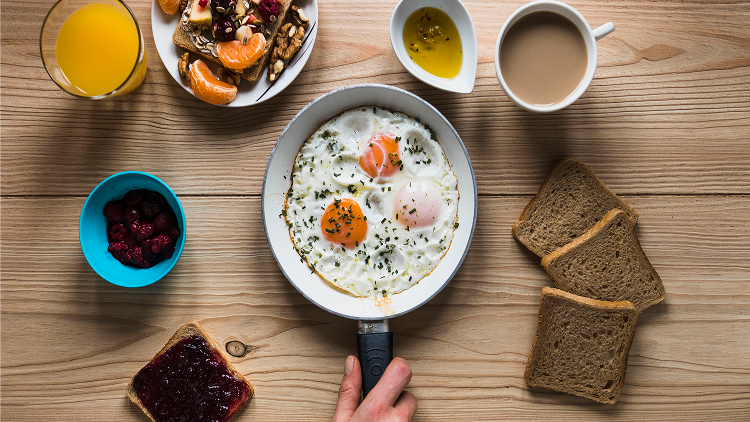
For women with PCOS, no meal has a more disproportionate impact on hormonal health than breakfast. What you eat in the first hour after waking does not just determine your morning energy — it sets your insulin levels, your cortisol patterns, and your androgen activity for the entire day. Get breakfast right and the rest of the day becomes hormonally easier: cravings are more manageable, energy is more stable, and cycles gradually improve over weeks and months. Get it wrong — or skip it entirely — and the hormonal disruption begins before the morning is even half over.
Research has specifically demonstrated this in PCOS. A study published in a clinical nutrition journal found that women with PCOS who ate a calorie-equivalent high-protein breakfast versus a dinner-heavy eating pattern showed significantly lower insulin, lower testosterone, and higher rates of ovulation over 12 weeks. The timing and composition of the first meal was genuinely predictive of hormonal outcomes throughout the day. This is not a minor nutritional recommendation — it is one of the most powerful daily interventions available for PCOS.
Here are 10 options that work, explained clearly so you understand what makes each one beneficial for PCOS specifically.
Before the specific options, understanding the formula matters. Every breakfast for PCOS needs three non-negotiable components:
What should not dominate breakfast for PCOS: large amounts of carbohydrates eaten without adequate protein and fat. A plain paratha with pickle, two toasts with jam, or a large bowl of cornflakes with milk may feel like a 'light' breakfast, but they produce the rapid insulin spike that is the core problem in PCOS.
Eggs are the gold standard PCOS breakfast, and the reasons are well-founded. A single egg provides 6–7g of complete protein containing all essential amino acids, healthy fat from the yolk, and choline — a nutrient critical for liver function and oestrogen metabolism that most Indian diets do not provide in adequate quantities. Two to three eggs produce essentially zero blood sugar impact while providing 12–21g of protein. They are affordable, quick to prepare, and endlessly varied.
This is one of the best Indian PCOS breakfasts available. Moong dal is high in plant protein, low-glycaemic, easy to digest, and rich in magnesium and folate — both directly relevant to PCOS. One medium cheela from roughly 50g of dal provides around 8–10g of protein. Pair two cheelas with mint chutney and a small bowl of curd and you reach the 20g protein target.
To make it: Soak moong dal overnight, drain, blend smooth with a little water, season with cumin, salt, and ginger, and cook on a non-stick pan like thin pancakes. The batter keeps refrigerated for 2 days.
Greek yogurt or thick strained curd (hung curd) contains nearly double the protein of regular yogurt because most of the whey has been removed. It is also rich in probiotics that support gut health — directly relevant for PCOS because gut bacteria regulate how oestrogen is metabolised and cleared from the body.
Oats are excellent for PCOS specifically because beta-glucan — the soluble fibre in oats — reduces post-meal glucose by slowing digestion and forming a gel that slows carbohydrate absorption. However, the benefit is almost entirely lost with flavoured instant oat packets, which often contain as much sugar as a commercial biscuit. Use plain rolled oats only.
Chickpea flour is notably higher in protein and lower in carbohydrates than wheat flour. It is also significantly richer in zinc, magnesium, and folate — three nutrients that are commonly deficient in PCOS and directly relevant to insulin sensitivity and cycle regularity. A besan cheela stuffed with spinach, onion, and capsicum, served with curd and green chutney, provides around 18–22g of protein and excellent blood sugar stability.
Ragi has a lower glycaemic index than most common grains (approximately 55–68 vs 72–88 for white rice), is rich in calcium (higher per gram than most dairy foods), iron, and fibre, and is naturally gluten-free. It digests slowly and maintains blood sugar stability for hours. Cook with minimal added sugar — a small ripe banana mashed in provides enough natural sweetness for most people.
Avocado provides monounsaturated fat, dietary fibre, potassium, magnesium, and glutathione — all beneficial for hormonal health and liver function. On a slice of whole grain or jowar bread rather than white bread, with a poached or fried egg on top, this becomes a nutritionally complete PCOS breakfast with protein, fat, and fibre.
Most commercial smoothies and standard fruit-blended recipes are primarily sugar in liquid form. A PCOS-appropriate smoothie is built on an entirely different principle: protein and fat first, with fruit as a small addition rather than the main ingredient.
research shows these disrupt gut bacteria and can trigger insulin release despite containing no sugar.
Paneer has essentially zero glycaemic impact — it is made of protein, fat, and calcium with minimal carbohydrate. Scrambled with tomatoes, onions, capsicum, and spices in a small amount of mustard oil, a 75–100g portion provides 14–18g of protein. Serve with one small bajra or whole wheat roti to add controlled complex carbohydrate with fibre. This is one of the most filling, hormonally appropriate Indian breakfasts available.
This requires zero morning preparation — the entire thing is made the evening before. Chia seeds are rich in omega-3 fatty acids, soluble fibre, calcium, magnesium, and zinc — all directly relevant to PCOS. The soluble fibre forms a gel overnight that dramatically slows glucose absorption.

Nutritionist and Dietician, Ruhi Rajput is a renown name, championing the integration of nutrition, lifestyle, and mindfulness She has over a decade of valuable experience, empowering health and nutrition through holistic approach.
Recognised as India's top Dietician and Nutritionist expert, with experience in Clinical Nutrition & Ayurvedic Dietetics. Ruhi has crafted a niche for herself with her excellence in gut health, natural Hormone balance with food and weight loss programs. She is popular for her holistic health approach and offers comprehensive solutions to gut health, weight management, autoimmune disorders and diet for Diabetes, Kidney and fatty liver.
Drawing from her expertise in nutrition and functional medicine Ruhi Rajput has made it easy for countless individuals to reach their optimal health goal with commitment to sustainable and holistic approach.