
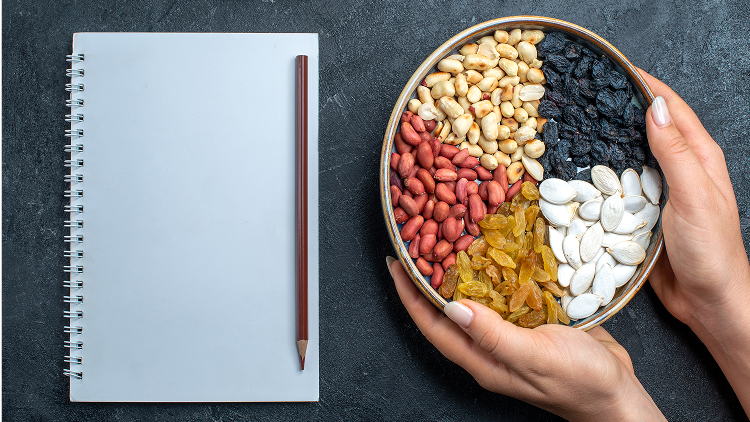
Seed cycling is one of those topics that divides people sharply. In PCOS support groups, you will find women who credit it with finally regulating their cycles after years of irregularity — and others who tried it consistently for months and felt absolutely nothing changed. Both groups are telling the truth.
The reality of seed cycling is more nuanced than either camp acknowledges. It is not a cure for PCOS, and the direct research on the full protocol is limited. But the individual seeds involved are nutritionally dense, have solid research behind their individual hormonal effects, and the protocol provides a simple framework that makes daily consumption of beneficial seeds sustainable. Understanding what it can realistically do — and what it cannot — allows you to make an informed choice about whether to try it.
This guide explains exactly what seed cycling is, what the science behind each seed shows, how to do it correctly to get the best results, and what to realistically expect over 3 months.
Seed cycling is a dietary practice that involves rotating four specific seeds across the two main phases of your menstrual cycle. The idea is that different seeds contain specific nutrients and plant compounds that support the hormonal requirements of each phase.
For women with PCOS whose cycles are long, irregular, or absent, the adaptation is simple: alternate every 14 days on a calendar basis — flaxseeds and pumpkin seeds for the first half of the month, sunflower and sesame seeds for the second half. Continue on this calendar rotation until cycle regularity begins to return.
Published clinical research confirms that flaxseed lignans measurably affect oestrogen metabolism and can extend cycle length.
The most critical implementation point: flaxseeds must always be ground before eating. The hull of a whole flaxseed is completely impermeable to digestive enzymes. Whole seeds pass through the digestive system largely intact, providing fibre but delivering almost none of the lignans or omega-3 fatty acids that make them valuable. Grind a week's supply using a small coffee or spice grinder and store in the fridge in an airtight container.
Pumpkin seeds are one of the richest plant sources of zinc — a mineral that plays several direct roles in the follicular phase of the cycle. Zinc is required for FSH (follicle stimulating hormone) receptor function, for follicle maturation, and for the LH surge that triggers ovulation. Zinc deficiency is directly associated with irregular ovulation and elevated androgens in PCOS, and it is also commonly deficient in women with PCOS because high insulin levels increase urinary zinc excretion.
Beyond zinc, pumpkin seeds contain significant magnesium (which improves insulin receptor function), iron, and selenium. They are also rich in tryptophan, which is a precursor to serotonin and melatonin — both relevant for the mood disruption and sleep problems that commonly accompany PCOS. Keep pumpkin seeds raw rather than roasted, as heat degrades zinc content.
Sunflower seeds are among the richest food sources of vitamin E — a fat-soluble antioxidant with specific roles in reproductive biology that makes it particularly valuable in the luteal phase. Vitamin E protects the corpus luteum — the temporary hormonal structure that forms in the ovary after ovulation and is responsible for producing progesterone in the second half of the cycle. Adequate vitamin E supports corpus luteum function and progesterone receptor sensitivity, both of which are commonly compromised in PCOS.
Vitamin E also reduces the oxidative stress in follicular fluid that damages developing eggs — relevant for PCOS fertility. Sunflower seeds additionally provide selenium, which supports thyroid function — directly relevant because thyroid dysfunction commonly overlaps with PCOS.
Sesame seeds contain sesamin and sesamolin — lignans with mild anti-oestrogenic properties that complement the progesterone-dominant requirements of the luteal phase. Beyond their hormonal plant compounds, sesame seeds have an exceptional calcium content — among the highest of any common food — which is directly relevant for PCOS. Multiple clinical trials have shown that calcium supplementation specifically reduces PMS severity, including the bloating, breast tenderness, mood disruption, and cramping that worsen in the premenstrual week for many women with PCOS.
It is important to be honest about the evidence base here. The individual seeds all have solid research behind their specific nutritional and hormonal effects — flaxseed lignans on oestrogen metabolism, zinc on ovulation, vitamin E on progesterone, calcium on PMS, and so on. This is well-established science.
However, research on the full seed cycling protocol — the specific alternating pattern of these four seeds across two cycle phases — is more limited. The direct clinical trials on seed cycling as a structured protocol are small and mostly observational. There is no large, well-controlled randomised trial specifically on seed cycling for PCOS.
The honest conclusion: the mechanisms are biologically plausible, all four seeds are nutritionally valuable in their own right, the approach has essentially no health risks or meaningful costs, and a consistent 3-month trial is a reasonable investment. Seed cycling is not a medical treatment — it is a nutritional strategy that works best as one component of a comprehensive PCOS dietary approach.
Based on clinical experience and the extensive anecdotal reporting in PCOS communities, the most commonly observed improvements from consistent seed cycling include:
Results vary considerably. Women with more severe insulin resistance, very infrequent cycles (less than 3 per year), or significantly elevated androgens tend to see less from seed cycling alone. It works best as an addition to a dietary foundation that addresses insulin resistance — not as a standalone intervention.
Understanding the connection between gut health and hormonal balance explains this gut-hormone connection and provides practical steps for improving microbiome health alongside seed cycling.

Nutritionist and Dietician, Ruhi Rajput is a renown name, championing the integration of nutrition, lifestyle, and mindfulness She has over a decade of valuable experience, empowering health and nutrition through holistic approach.
Recognised as India's top Dietician and Nutritionist expert, with experience in Clinical Nutrition & Ayurvedic Dietetics. Ruhi has crafted a niche for herself with her excellence in gut health, natural Hormone balance with food and weight loss programs. She is popular for her holistic health approach and offers comprehensive solutions to gut health, weight management, autoimmune disorders and diet for Diabetes, Kidney and fatty liver.
Drawing from her expertise in nutrition and functional medicine Ruhi Rajput has made it easy for countless individuals to reach their optimal health goal with commitment to sustainable and holistic approach.