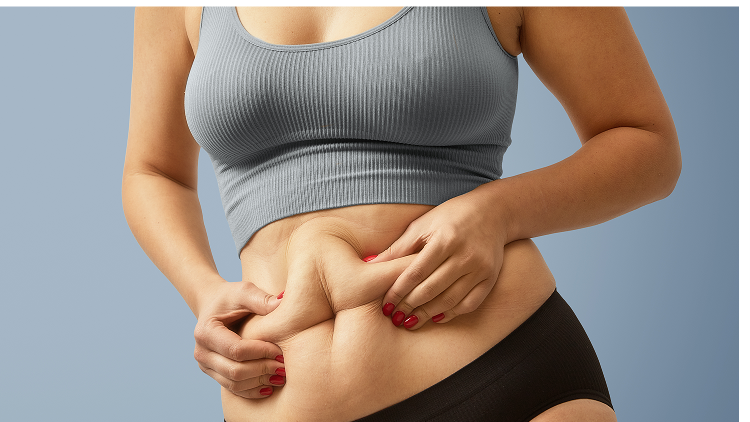
Endo Belly, Hormonal Bloating or Food Intolerance — How to Tell the Difference and What to Do
You wake up with a flat stomach and by evening you look and feel several months pregnant. Or you bloat immediately and severely after eating certain foods regardless of where you are in your cycle. Or your abdomen swells predictably in the week before your period and deflates as soon as menstruation starts. These feel like the same problem — bloating — but they are actually three distinct conditions with different causes, different patterns, and different solutions.
The reason so many women spend years trying strategies that only partially help is that they are treating one type of bloating with the solution designed for a different one. Understanding which type you are dealing with changes everything about what will actually work for you.
This guide explains the specific characteristics of each type of bloating in plain language, gives you a way to identify which one you have based on your personal pattern, and provides the dietary and lifestyle strategies that address each one specifically.
What Is Endo Belly?
World Health Organization, and is consistently underdiagnosed by an average of 7–10 years. Endo belly is one of its most commonly reported and most distressing symptoms — yet it is frequently dismissed or misattributed to 'normal' bloating.
Endo belly is bloating that is driven by endometriosis-related inflammation, prostaglandin activity, and — in many women — adhesions (scar tissue from endometriotic lesions) that physically restrict the bowel and affect motility.
How to Recognise Endo Belly
- The bloating is often dramatic and rapid — the abdomen can extend visually within an hour of waking, without food being the primary trigger
- It is frequently most severe around menstruation and in the days immediately before a period, when prostaglandins and inflammation peak
- It is often accompanied by significant pain — pelvic pain, lower back pain, and pain with bowel movements
- It does not fully resolve with the dietary changes that help food-related bloating
- It may be accompanied by other endometriosis symptoms: very painful periods, pain during intercourse, or difficulty conceiving
What Helps Endo Belly
- An anti-inflammatory diet reduces the prostaglandin and cytokine activity that drives the swelling — omega-3 from fatty fish, turmeric, ginger, and removing red meat and excess refined carbohydrates are the most impactful changes
- Reducing dietary oestrogen burden helps because endometriosis is oestrogen-dependent; cruciferous vegetables, ground flaxseeds, and adequate fibre support oestrogen clearance
- Gut healing is important because gut dysbiosis and intestinal permeability worsen endometriosis inflammation
- Medical management is often necessary — dietary change reduces severity but cannot resolve the structural cause
What Is Hormonal Bloating?
Hormonal bloating follows a predictable monthly pattern tied directly to the menstrual cycle. It is driven by oestrogen and progesterone fluctuations that affect water retention, gut motility, and gas production — not primarily by food choices.
How to Recognise Hormonal Bloating
- It appears consistently in the same phase of your cycle, typically the week before your period
- It is not triggered by specific foods — you can eat exactly the same meal on day 10 of your cycle and again on day 25 and feel completely different
- The abdomen feels tight and full rather than painful; the swelling is more generalised rather than focal
- It resolves within 1–2 days of menstruation starting, consistently, every cycle
- It may be accompanied by breast tenderness and premenstrual mood changes — all driven by the same hormonal pattern
What Helps Hormonal Bloating
- Reducing sodium intake in the week before your period — excess salt worsens the water retention that oestrogen promotes
- Magnesium glycinate 300mg in the luteal phase — reduces fluid retention and PMS severity
- Potassium-rich foods — banana, avocado, dark leafy greens — counteract sodium and reduce fluid retention
- Diuretic herbs — dandelion tea and fennel tea reduce water retention without depleting electrolytes
- Fennel seeds after meals: reduce intestinal gas and spasm throughout the cycle
What Is Food Intolerance Bloating?
Food intolerance bloating is triggered by specific foods regardless of where you are in your cycle. It is not an immune response (which is true food allergy) but a digestive system reaction — the inability to break down certain food components, producing fermentation, gas, and gut wall irritation.
How to Recognise Food Intolerance Bloating
- Triggered reliably by specific foods — the same food causes bloating consistently, whether eaten on day 3 or day 21 of your cycle
- Onset is typically 30 minutes to 4 hours after the triggering food
- Often accompanied by gas, altered bowel habits, or abdominal gurgling alongside bloating
- Does not follow the monthly pattern of hormonal bloating
- Common trigger foods: wheat and gluten, dairy (especially liquid milk), certain legumes, high FODMAP foods like onion and garlic
What Helps Food Intolerance Bloating
- Identifying triggers through a structured food diary or elimination diet
- Low FODMAP approach for suspected carbohydrate fermentation intolerance
- Removing gluten for 4 weeks to assess wheat sensitivity — if symptoms improve and return on reintroduction, gluten is a driver
- Lactase enzyme supplements or lactose-free dairy for lactose intolerance
- Digestive enzyme supplements — particularly those containing amylase and protease — support breakdown of difficult-to-digest foods
The Bloating Diary — How to Identify Your Type
Keeping a 4-week diary is the single most useful diagnostic tool for understanding your specific bloating pattern. Track the following every day:
- Bloating severity (1–10 scale), morning and evening separately
- What you ate and when
- Where you are in your menstrual cycle (day 1 = first day of period)
- Other symptoms: pain level, stool type, energy, mood
After 4 weeks, review the pattern:
- Bloating clusters around days 21–28 and resolves at menstruation → hormonal bloating
- Bloating clusters around period and is severe and painful → endo belly suspected
- Bloating triggered by specific foods regardless of cycle day → food intolerance
- A combination → which is likely, as many women have more than one type
Dietary Strategies That Help All Three Types
- Eat slowly and chew thoroughly — this is one of the most underrated bloating interventions; swallowed air and inadequately broken-down food both ferment in the gut
- Avoid carbonated drinks — every bubble is trapped air that has to exit somewhere
- Reduce raw onion and garlic — high FODMAP content regardless of bloating type
- Warm ginger and peppermint tea after meals — reduce intestinal spasm and gas movement
- Eat at regular intervals — long gaps allow bacterial overgrowth to increase
- Support gut bacteria: fermented foods (curd, chaas, idli, dosa) reduce dysbiosis that worsens all three types of bloating
The Bloating-Inflammation Connection — Why Anti-Inflammatory Eating Helps All Three Types
One thing all three types of bloating share is that systemic inflammation makes them worse. Inflammation sensitises the gut wall, making it more reactive to fermentation, more permeable to gas, and more responsive to hormonal fluctuations. An anti-inflammatory dietary foundation therefore reduces the severity of all three bloating types simultaneously.
The most impactful anti-inflammatory changes for bloating in women are: removing refined vegetable oils (particularly refined sunflower and corn oil, which are high in inflammatory omega-6) and replacing them with cold-pressed oils; adding omega-3 from fatty fish at least twice weekly; removing refined sugar and processed food; and adding turmeric, ginger, and garlic daily. These changes do not address the immediate trigger of any specific bloating episode, but they measurably reduce the baseline inflammatory state that determines how severe all bloating episodes are.
When to Seek Medical Assessment
Dietary change manages most bloating effectively in women. However, certain bloating patterns warrant medical investigation rather than dietary management alone:
- Bloating accompanied by visible abdominal distension that is new, rapid, or accompanied by unintentional weight loss — these can indicate serious conditions that require medical investigation
- Bloating with blood in the stool, regardless of whether pain is present
- Severe abdominal pain with bloating that is different from your usual pattern
- Bloating that began after antibiotic use and has not resolved in 4–6 weeks — possible SIBO (small intestinal bacterial overgrowth) requiring testing
- Bloating accompanied by very painful periods and pain with bowel movements — warrant investigation for bowel endometriosis
gut health programme can help you identify the specific type and the most targeted dietary response.